

Our Story
The discipline of choosing well
Unwrap the unexpected.
Choosing well takes time nobody has, and a kind of knowledge most of us have no reason to hold. Petalby exists to take that work on. Nothing goes into a box that has not been argued for.
What follows is the whole of it, in four parts: where a piece is found, what it has to be to get in, how a Collection is built so that it holds together, and what happens on the packing table before the lid goes on.
What we believe
Most of the work is deciding what to leave out.

One — the search
Where a piece is found
The looking takes most of the year and most of it comes to nothing. A trade hall, a maker’s bench, a clearance list somebody else had already passed over. A good afternoon ends with one thing worth carrying home.
A little of what arrives we made ourselves. The rest we chose — from small British makers, established skincare houses, and workshops we would buy from on our own account. Where a maker’s record says who made a thing and how, we pass it on; where it does not, we choose again rather than write a story.
A good deal reaches us as surplus: pieces over-produced, discontinued, or left behind by a change of season. They are not seconds and they are not remainders in the sad sense of the word — they are good things that outlived the reason they were made. Finding those a second life is among the better parts of the job.
Two — the selection
Four questions, asked of every piece
Most things do not get through them. A piece is judged beside the ones it would travel with, never on its own, and something made in our own kitchen is asked the same four questions as something bought. A no costs nothing; a yes has to hold its place against everything that comes after it, which is why the answer is no far more often than it is yes.
- Good of its kind. Not adequate — good, judged against the alternatives we set aside. A piece we made ourselves is held to it just as strictly.
- Something we would be glad to receive ourselves. If the answer is not an immediate yes, it does not make the cut.
- Sits well beside the others. A composition, not a container.
- Never filler. A smaller box of three good things over a fuller one padded with a fourth that doesn’t belong.
Three ways to send one
The Curated Collections
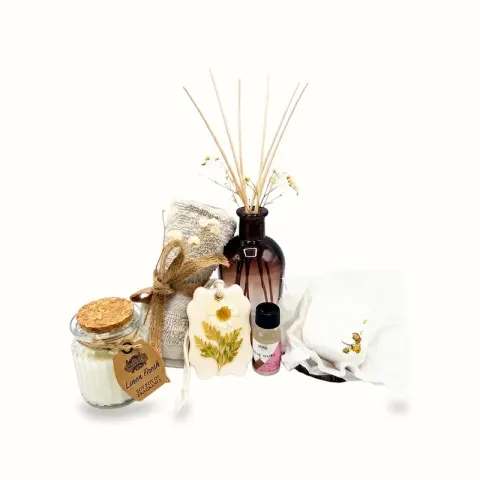
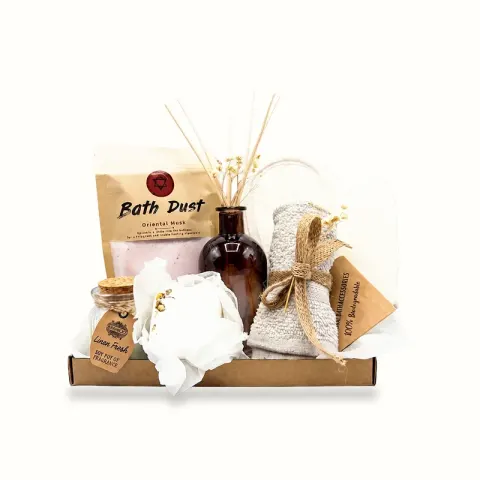
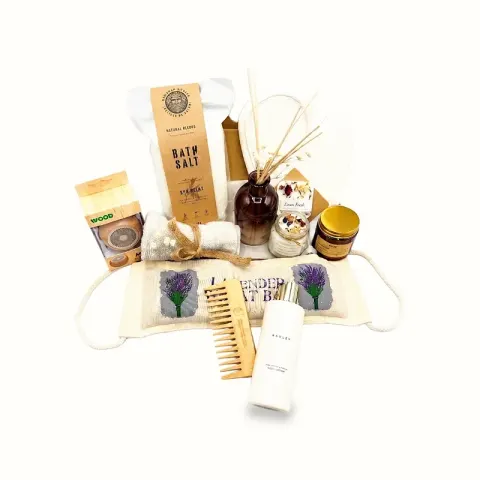
Every Collection on the shop is composed the way this page describes — chosen against each other, then wrapped. All three collections.

Three — the composition
Who chooses what goes in
Chosen with care and consideration.
It began at a kitchen table — wrapping gifts for people we knew, and making a few of the things that went in them. It is still a small operation. Laura’s daughter now works at the bench where the making happens and at the table where a composition is laid out. All stock is handpicked.
What we make, we make here, by hand and in small numbers. What we do not make, we choose. A piece we made ourselves earns its place the same way a bought one does, or it does not go in.
- What we look for: pieces that are good of their kind, that we would be glad to receive, and that sit well beside each other.
- How a composition is checked: as the thing that will be opened, not as a list — and taken apart and made again if it doesn’t hold together.
The table is where that happens. A Collection is laid out whole before anything is wrapped, in the order the pieces would be lifted out, so the shape of the opening can be seen before it is sealed. Scent beside scent, weight against weight, something quiet next to something that is not.
More time goes here than anywhere else. Finding a good piece is a morning; deciding which three good pieces belong in the same box, and in what order, is the part of the work that is actually difficult.
Four — the presentation
What happens on the packing table
The last half hour of a Collection’s life here is the one nobody thinks about, and it is the one that decides how the first minute of its next life feels.
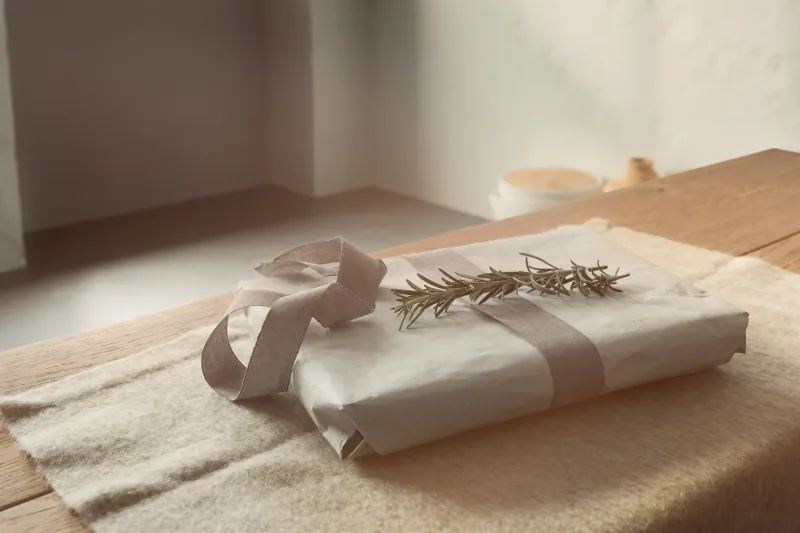
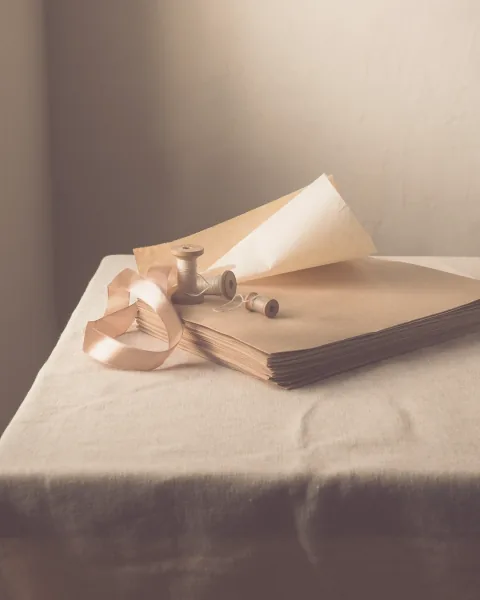
Pieces are wrapped in tissue and set down in the order they came off the table, the heavier things low so that nothing arrives having leaned on anything. A ribbon is tied rather than stuck. Where a gift card has been added, your words are written out by hand on a proper card and tucked in before the lid goes on.
Then the box is closed, and opened once more, and looked at. It is the only view of it we get, and the person who packed it is the person who checks it.
We cannot promise how a gift will land — nobody can, and anyone who says otherwise is selling you the wrong thing. What we can do is take every decision that is ours to take as though we were the one untying the ribbon.

The mystery
Kept from you, deliberately
A gift you picked out for yourself is shopping. A gift someone else chose carries their judgement with it, and the surprise is what protects that. Not every occasion suits one — and when it has to be specific, we compose to order.
Everything above this line is how the choosing is done. The only thing held back is which pieces it landed on, and it is held back for one afternoon in the life of the gift. It is the single decision we ask you to leave with us, and the four chapters above are the whole of the case for doing so.
The Range
Everything we choose from


When you are ready
Send one
Three sizes, composed the way this page describes and wrapped before they leave. If none of the three is the right shape, tell us who it is for and we will put something together.